From Mother Teresa’s service to India’s poorest, to Martin Luther King Jr.’s struggle against racial discrimination, to Habib Abubakar Alatas’s decades of service to Indonesia’s forgotten communities, the measure of a life is the humanity it gives to others.
By: Hafid Abbas
Professor of Human Rights Education, Jakarta State University
In a world increasingly divided by religion, ethnicity, nationality, political ideology and economic privilege, we need to ask a fundamental question: What makes a human life truly meaningful?
Is it the wealth we accumulate, the positions we occupy, the influence we exercise or the recognition we receive? Or is it the suffering we alleviate, the dignity we restore and the lives we protect without asking who deserves our compassion?
The lives of three remarkable humanitarians offer a compelling answer. Mother Teresa, who devoted herself to the poorest and most vulnerable in India; Martin Luther King Jr., who challenged racial segregation and fought for equality in the United States; and Habib Abubakar Alatas, who has spent more than four decades serving disadvantaged women and children, including people affected by leprosy in Maluku and Ternate, Indonesia, demonstrate that humanity’s highest calling is to serve others.
Their circumstances, traditions and methods differed. Yet their lives converge on a moral conviction that transcends borders: no human being should be abandoned because of poverty, race, illness or social status.
Compassion that restores human dignity
Mother Teresa’s humanitarian legacy emerged from her commitment to people whom society too often regarded as invisible. Through her work in Kolkata and elsewhere in India, she brought attention to the destitute, the sick, the dying and those deprived of family support.
Her contribution was not simply the provision of food, shelter or physical care. It was also a declaration that even those who appeared to have lost everything retained their human dignity.
Her example reminds us that poverty is not merely an economic condition. It can also become a condition of social exclusion, in which people are deprived of the recognition and respect that should belong to every human being.
Martin Luther King Jr. confronted another manifestation of that exclusion. In Atlanta and across the United States, he became a leading voice in the struggle against racial segregation and discrimination. His leadership helped transform the civil rights movement into a historic demand for equal citizenship, justice and freedom.
King’s vision extended beyond the experiences of Black Americans. He challenged the moral legitimacy of systems that denied people equal opportunities and human worth because of the circumstances of their birth. His dream was not merely that different races should coexist, but that they should live together as equals.
Where Mother Teresa confronted the abandonment of the poor, King confronted the institutional denial of equality. Both insisted, through different forms of service, that human dignity cannot legitimately depend on wealth, race or social standing.
Habib Abubakar Alatas: A lifetime of service to the forgotten
Indonesia, too, has a humanitarian figure whose life deserves greater public recognition.
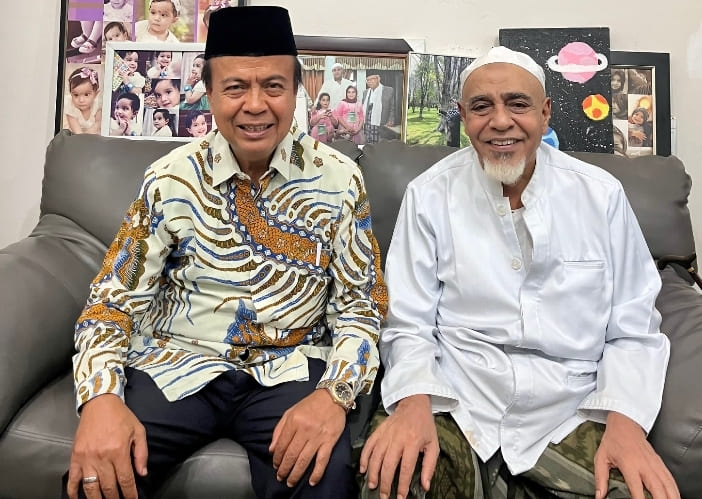
Habib Abubakar Alatas has devoted more than four decades to serving disadvantaged women and children, particularly vulnerable communities in Maluku and Ternate, including people affected by leprosy. His work represents a sustained commitment to people whose suffering has too often been compounded by poverty, isolation and social stigma.
Leprosy is not only a medical condition. In many communities, those affected have also had to endure rejection, discrimination and the painful loss of social belonging. Serving them requires more than material assistance; it requires the willingness to stand alongside people whom others may prefer not to see.
This is where Habib’s humanitarian commitment assumes a significance beyond the immediate benefits of his work.
According to accounts of his activities, his service has continued across decades, without being confined to one geographical area or one category of beneficiary. His humanitarian concern also extends to the poorest households across Greater Jakarta, or Jabodetabek.
His home in Depok, rather than being merely a private domestic space, reportedly serves as a storehouse for tonnes of rice that are regularly distributed to people experiencing extreme poverty.
There is a profound symbolism in this image. Rice, an everyday necessity for millions of Indonesian families, becomes an instrument of solidarity. A home becomes a place of distribution and service. Private resources are directed toward people whose needs might otherwise remain overlooked.
Such work rarely attracts the international attention associated with famous political leaders or globally recognized humanitarian institutions. Yet its value is measured in the meals provided, the families supported and the dignity preserved.
Habib’s example invites us to reconsider the meaning of religious identity. Faith should not become a boundary that limits compassion. At its most humane, it should inspire people to serve beyond the boundaries of their own communities.
His humanitarian commitment, as described by those familiar with his work, is not restricted by religion, ethnicity, nationality or culture. The suffering of another person is sufficient reason to act.
Three lives, one moral horizon
Mother Teresa, Martin Luther King Jr. and Habib Abubakar Alatas should not be treated as identical figures. Their historical circumstances, public roles and approaches to social problems are different. Mother Teresa emphasized direct care for people in extreme deprivation; King combined moral leadership with organized political action against systemic discrimination; and Habib’s work illustrates the importance of sustained, practical assistance to marginalized communities.
Their comparison is valuable precisely because it reveals different dimensions of humanitarian responsibility.
Compassion must care for immediate suffering. Justice must challenge the structures that produce or perpetuate exclusion. And solidarity must continue long after public attention has moved elsewhere.
A society needs all three.
Food distribution can save a family from hunger today, but lasting poverty reduction also requires education, decent employment and effective public services. Medical assistance can alleviate suffering, but justice also demands that people affected by stigmatized diseases receive equal treatment and social acceptance. Racial equality requires more than individual goodwill; it demands institutions that protect equal rights.
The lesson, therefore, is not that personal generosity can replace government responsibility. Rather, exemplary individuals remind governments and citizens alike of the moral standards by which public institutions and economic systems must be judged.
Habib’s life also challenges Indonesia’s understanding of success. In a society where wealth, influence and social prestige can become measures of achievement, a person who consistently directs resources toward the poorest offers a different standard of greatness.
The question is not how many people know our name, but how many people can live with greater dignity because we chose to help them.
When humanitarianism must confront environmental injustice
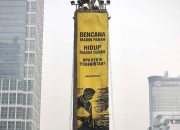
This moral principle has particular urgency as Indonesia confronts forest and land fires that produce dangerous haze across national borders.
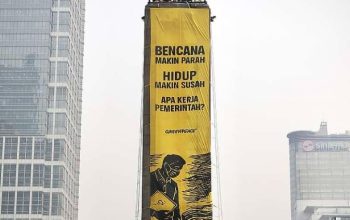
In 2026, fires in Kalimantan and Sumatra have contributed to hazardous air pollution affecting Indonesia and neighboring countries. The regional consequences have included respiratory health risks and disruptions to children’s education, with more than 1.4 million students in six Indonesian provinces shifted to online learning during the reported crisis. Source: CNA, Sept. 2026
This is not merely an environmental issue. It is a question of human rights, public health and intergenerational justice.
Children cannot choose the quality of the air they breathe. Families cannot individually extinguish fires across vast landscapes. And people in neighboring Malaysia, Brunei Darussalam, Singapore and elsewhere in Southeast Asia should not have to bear the consequences of environmental damage originating beyond their borders.
Concerns that some fires may be associated with land clearing for agricultural expansion, including oil-palm plantations, must be investigated through credible evidence, transparent monitoring and independent enforcement. Commercial interests cannot justify practices that endanger lives, destroy ecosystems or deprive children of safe learning environments.
President Prabowo Subianto and Vice President Gibran Rakabuming Raka have a responsibility to ensure that environmental protection is treated as a national priority. This means strengthening fire prevention, enforcing the law against those responsible for illegal burning, protecting forests and peatlands, holding companies accountable where violations are established, and cooperating with ASEAN neighbors to prevent recurring transboundary haze.
Economic development is essential, but it cannot be considered successful when its costs are transferred to children, vulnerable communities and future generations.
The moral test of leadership is not simply how much economic growth a nation achieves. It is whether that growth protects human life, preserves the natural foundations of prosperity and distributes its benefits without sacrificing the health and dignity of others.
A legacy beyond identity and borders
The lives of Mother Teresa, Martin Luther King Jr. and Habib Abubakar Alatas remind us that humanitarianism has many forms, but its moral foundation is universal.
One served the destitute and dying. Another challenged racial injustice and demanded equality. The third has devoted decades to communities that need sustained assistance, from people affected by leprosy in Maluku and Ternate to impoverished families around Jakarta.
Their examples should inspire us not merely to admire extraordinary individuals, but to ask what responsibilities their lives place upon the rest of us.
Religious leaders must look beyond religious boundaries. Governments must look beyond electoral cycles. Businesses must look beyond short-term profits. Citizens must look beyond the comfort of their own social circles.
And all of us must recognize that humanity is not an abstract ideal. It is a daily responsibility expressed through food shared, prejudice challenged, forests protected, children safeguarded and forgotten people treated as equals.
The world does not lack declarations of compassion. What it often lacks is the courage to translate those declarations into consistent action.
Habib Abubakar Alatas’s decades of service offer a reminder that humanitarian commitment need not be confined by geography, identity or public recognition. Its greatest significance may lie precisely in its persistence: the decision to continue serving when the work is difficult, the beneficiaries are marginalized and the rewards are not measured in wealth or prestige.
Ultimately, the legacy of these three lives is a challenge to every individual and institution: to make compassion practical, justice universal and human dignity non-negotiable.