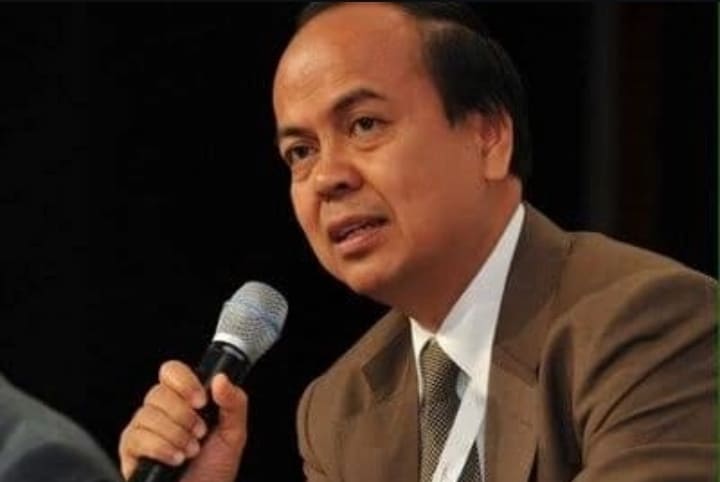
By: Hafid Abbas
Professor of Human Rights Education, Jakarta State University
Indonesia’s ambition to become a prosperous, high-income nation by 2045 will depend not only on how fast its economy grows, but also on how fairly that growth is achieved. Investment, industrial expansion and job creation are essential. Yet their long-term value is diminished when workers face exploitation, communities lose access to their livelihoods, or businesses overlook the rights of people affected by their operations.
This is why business and human rights must become an integral part of Indonesia’s economic development strategy, rather than a separate concern left to human rights institutions.
The Indonesia Business and Human Rights Forum 2026, officially opened by Human Rights Minister Natalius Pigai at the JW Marriott Hotel in Jakarta on Oct. 26, offers an important opportunity to advance this agenda. Bringing together more than 300 participants from government institutions, businesses, civil society and academia, the three-day forum seeks to strengthen cooperation in building responsible business practices.
Its significance extends beyond the gathering itself. The Ministry of Human Rights is preparing a new national roadmap for business and human rights for 2026–2030, intended to be adopted through a presidential regulation. The challenge will be to translate this policy ambition into concrete changes in corporate behavior, public oversight and the everyday lives of Indonesian workers and communities.
From commitment to accountability
Indonesia has already taken important steps. Presidential Regulation No. 60/2023 established the National Strategy on Business and Human Rights. With that strategy period ending, the proposed new framework offers an opportunity to consolidate past achievements and address implementation gaps.
The broader legal foundation is also significant. Law No. 59/2024 on the National Long- Term Development Plan for 2025–2045 places human rights within Indonesia’s long- term development direction. Meanwhile, Presidential Regulation No. 12/2025 on the National Medium-Term Development Plan for 2025–2029 includes strengthening business and human rights and human rights education for companies among the relevant policy priorities.
These commitments reflect an essential principle: businesses have a responsibility to respect human rights, regardless of whether governments have the capacity to prevent every violation.
The United Nations Guiding Principles on Business and Human Rights, endorsed in 2011, provide the internationally recognized framework. They rest on three pillars: the state duty to protect human rights, the corporate responsibility to respect human rights, and access to remedy for people whose rights have been harmed.
For Indonesia, the priority now is implementation. A company’s commitment to sustainability should not be measured solely by the language in its annual report, its philanthropic activities or its environmental targets. It must also be assessed by how it treats workers, engages affected communities, manages its supply chains and responds when harm occurs.
Human rights due diligence is central to this process. It requires companies to identify actual and potential human rights impacts, prevent or mitigate adverse effects, track their responses, communicate their efforts and contribute to remedy where appropriate.
This is not simply a compliance exercise. It is a way to identify risks early, build trust and reduce the likelihood that unresolved grievances will escalate into costly disputes.
PRISMA: A starting point, not the destination
Indonesia has developed PRISMA, or Penilaian Risiko Bisnis dan HAM (Business and Human Rights Risk Assessment), as a tool for businesses to assess their human rights risks.
Its value lies in making human rights considerations more systematic and accessible to companies. However, assessment alone cannot guarantee protection. Identifying a risk without acting on it is no substitute for preventing harm.
The next national roadmap should therefore connect PRISMA assessments to a continuous cycle of prevention, mitigation, monitoring and remediation. Companies must demonstrate not only that they have identified risks, but also what they have done to address them and whether their responses have been effective.
The Ministry’s proposed presidential regulation on assessing business compliance with human rights would introduce mandatory due diligence for businesses employing at least 2,000 workers and/or classified as high-risk under criteria to be determined by the minister. Because this remains a proposed framework, its final scope, obligations and enforcement arrangements will matter greatly.
Large corporations should be expected to lead by example. Yet smaller businesses should not be excluded from the national agenda. Small and medium-sized enterprises are important to employment and local economic development, and many participate in the supply chains of larger companies. They need practical guidance, proportionate requirements and access to training so that responsible business conduct becomes achievable across the economy.
Human rights and economic competitiveness
Some business leaders may regard human rights due diligence as an additional cost. But the more important question is what it costs to ignore human rights.
Unsafe working conditions, discrimination, forced or child labor, land-related conflicts and inadequate consultation with affected communities can damage reputations, disrupt operations and undermine investor confidence. Preventing such harm is both a human rights obligation and a sound approach to managing business risks.
This connection is especially relevant as Indonesia pursues accession to the Organisation for Economic Co-operation and Development (OECD). The OECD framework for responsible business conduct emphasizes the need for companies to respect human rights, address adverse impacts and apply due diligence across their operations and business relationships.
The accession process creates an opportunity for Indonesia to strengthen corporate governance and demonstrate that its investment climate is built on transparent, predictable and responsible practices.
International competitiveness should not be achieved by lowering protections for workers or communities. Rather, Indonesia should compete by offering a business environment in which economic opportunity is supported by legal certainty, responsible investment and respect for human dignity.
Making the 2026–2030 roadmap count
Three priorities should guide the new national roadmap.
First, the government must establish clear responsibilities and credible oversight. Ministries, regional governments, human rights institutions, employers and labor organizations need mechanisms to coordinate their work, share information and evaluate progress. Presidential-level commitment will matter only if it is translated into measurable institutional responsibilities.
Second, companies must embed human rights due diligence in their everyday decisions. Boardrooms, procurement departments, human resources teams and supply-chain managers should treat human rights risks as integral to business strategy. Workers and affected communities must have meaningful opportunities to raise concerns without fear of retaliation.
Third, access to remedy must become a practical reality. People harmed by business activities need accessible complaint mechanisms, timely responses and effective remedies. Corporate grievance procedures should complement, not replace, judicial and other legitimate avenues of redress. Independent monitoring and transparent reporting can help establish whether commitments are producing results.
Progress should be measured by outcomes, not merely by the number of companies registered on PRISMA, assessments completed or training sessions conducted. The ultimate tests are whether risks are being prevented, working conditions are improving, communities are being heard and people harmed by business activities can obtain effective remedies.
The government must also ensure that implementation is fair, transparent and consistent, with appropriate technical support and proportionate expectations for businesses of different sizes and risk profiles.
Indonesia Emas 2045 should mean more than a larger economy. It should represent a nation in which prosperity is shared more fairly, public institutions protect people’s rights, and businesses succeed without compromising human dignity.
The 2026 forum can help lay the foundation. The real measure of its success, however, will be whether the coming roadmap turns commitments into consistent practice across Indonesia’s economy.
Responsible business is not an obstacle to prosperity. It is one of the foundations on which lasting prosperity must be built.
“Human rights for all, and all for human rights — the foundation of a dignified, prosperous, and sustainable Indonesia by 2045.”