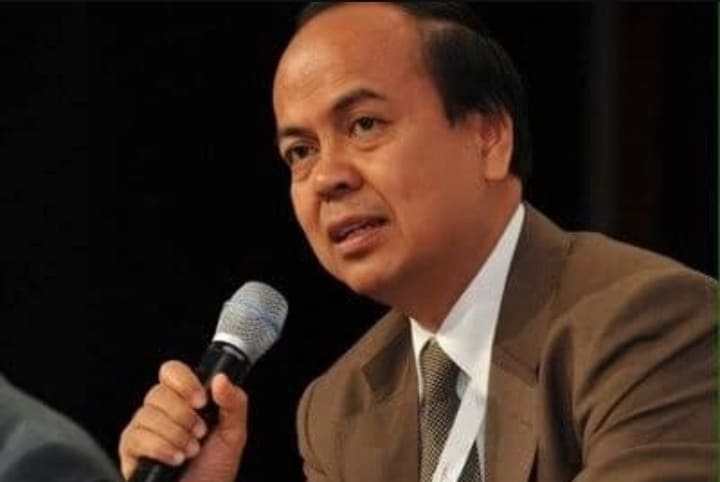
By: Hafid Abbas
Visiting Professor, at Asia Center Harvard University 2006
Coordinating Minister for Law, Human Rights, Immigration, and Corrections Yusril Ihza Mahendra’s remarks at the commemoration of the United States’ upcoming 250th Independence Day in Jakarta appropriately framed Indonesia–US relations through the lens of “mutual respect” and a growing Comprehensive Strategic Partnership. His emphasis on expanding cooperation since 2023, spanning trade, energy, technology, and people-to-people exchanges, reflects the steady institutional deepening of bilateral ties.
Yet as Indonesia and the United States further consolidate their partnership, it is equally important to situate this relationship within Indonesia’s broader geopolitical identity— not merely as a partner in the Indo-Pacific, but as a central actor in ASEAN, a leading voice in the Organization of Islamic Cooperation (OIC), and a founding force in the Non- Aligned Movement (NAM). These multilayered roles fundamentally shape how Jakarta engages Washington, and how Washington in turn perceives Indonesia’s strategic relevance.
Indonesia is not simply one of eleven ASEAN member states. It is the region’s demographic, economic, and political anchor. As the largest economy in Southeast Asia and the world’s third-largest democracy, Indonesia plays a stabilising role in ASEAN’s consensus-driven architecture. Its influence extends beyond economics into norm-setting on regional security, maritime governance, and digital transformation. For the United States, this makes Indonesia not just a bilateral partner, but a gateway to ASEAN centrality—a principle Washington continues to endorse in its Indo-Pacific strategy.
This ASEAN dimension is critical to understanding why the Indonesia–US partnership carries weight beyond conventional trade and investment flows. Any meaningful US engagement in Southeast Asia is structurally incomplete without Indonesia’s leadership in shaping regional coherence. In this sense, Jakarta’s diplomatic agency is not derivative; it is constitutive of regional order.
Indonesia’s global role extends further through its position in the OIC, where it stands as the largest Muslim-majority nation in the world. With a population exceeding 289 million, Indonesia’s Muslim community alone represents a demographic scale comparable to large parts of the Middle East. This fact is often underappreciated in geopolitical discourse, yet it underscores Indonesia’s unique ability to bridge civilisational and political divides within the Islamic world.
Within the OIC framework, Indonesia consistently advocates for moderation, development-oriented cooperation, and peaceful conflict resolution. Its voice carries particular legitimacy precisely because it represents a democratic model of Muslim-majority governance. For the United States, this positions Indonesia as a critical interlocutor in broader engagements with the Muslim world—especially at a time when global politics remains sensitive to narratives of religion, identity, and representation.
Equally significant is Indonesia’s founding role in the Non-Aligned Movement, which today comprises 118 countries across Asia, Africa, and Latin America. NAM remains one of the most enduring expressions of post-colonial solidarity and strategic autonomy. Indonesia’s leadership in its formation continues to shape its foreign policy instinct: a preference for independence of action, balanced engagement, and resistance to rigid bloc politics.
This historical legacy is not symbolic; it remains operational. Indonesia’s approach to major power relations—including with the United States—is guided by a consistent commitment to strategic autonomy. As global tensions intensify and geopolitical alignments harden, Jakarta’s non-aligned posture provides both flexibility and credibility among developing nations. It also reinforces Indonesia’s role as a diplomatic bridge between competing global interests.
It is within this broader context that Yusril Ihza Mahendra’s emphasis on economic cooperation with the United States should be understood. The US remains a key economic partner—one of Indonesia’s largest export destinations and a significant source of investment, particularly in high technology, energy transition, and digital innovation. However, Indonesia’s engagement is not defined by dependency, but by diversification. Its economic diplomacy increasingly reflects its dual ambition: to attract high-quality investment while maintaining policy space consistent with national development priorities.
Under President Prabowo Subianto’s vision of a sovereign, resilient, and prosperous Indonesia, economic resilience is inseparable from food security, energy security, technological advancement, and defence capability. These priorities are not inward- looking; they are prerequisites for Indonesia’s outward role as a regional and global actor. In this regard, cooperation with the United States is best understood not as alignment, but as convergence where interests overlap.
Yusril’s reference to strengthened communication between Indonesian and US leadership reflects the importance of high-level diplomacy in sustaining momentum. Yet durable partnership ultimately depends less on political rapport and more on institutional depth. Legal certainty, predictable regulatory frameworks, and robust implementation mechanisms will determine whether strategic aspirations translate into sustained outcomes.
Beyond state-to-state relations, the growing emphasis on people-to-people ties adds another layer of strategic significance. Indonesian diaspora communities in the United States, along with expanding collaboration in education, startups, creative industries, and research, are increasingly shaping the texture of bilateral engagement. These networks function as informal diplomatic channels, often outlasting shifts in political leadership and policy direction.
Still, structural barriers remain. Mobility constraints, professional recognition challenges, and uneven access to exchange opportunities continue to limit the full potential of these transnational linkages. Addressing these issues would not only deepen bilateral ties but also strengthen Indonesia’s broader global connectivity.
Ultimately, the Indonesia–US relationship should be viewed through a dual lens: as a bilateral partnership and as a strategic interface with Indonesia’s wider global roles. For Washington, engaging Indonesia effectively means engaging ASEAN’s anchor state, the largest Muslim-majority democracy, and a founding leader of the Non-Aligned Movement. For Jakarta, engaging the United States means leveraging cooperation without compromising its strategic autonomy or regional leadership.
Mutual respect, therefore, must be understood not as rhetorical balance, but as recognition of structural reality. Indonesia is not a peripheral actor in the global system; it is a shaping force across multiple institutional arenas. The future of Indonesia–US relations will depend on how well.
As Jimmy Carter’s statement—“Because we are free, we can never be indifferent to the fate of freedom elsewhere”—adds a moral dimension to Yusril Ihza Mahendra’s emphasis on mutual respect in Indonesia–United States relations. While Yusril highlights a practical partnership based on cooperation in trade, energy, and technology, Carter’s view reminds us that such engagement also carries a broader responsibility to uphold human dignity and freedom globally.
In this sense, both perspectives are complementary: Yusril focuses on structured, interest-based cooperation grounded in sovereignty, while Carter underscores the ethical importance of free nations caring about conditions beyond their borders. Together, they suggest that Indonesia–US relations are strongest when they balance strategic interests with shared values that support peace and stability.