![Rektor STIE Dharma Bumiputra 2008-2020, Prof. Hafid Abbas. [Foto: istimewa]](https://rilpolitik.com/wp-content/uploads/2026/05/1000062079.jpg)
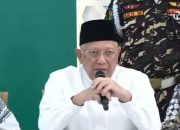
By Hafid Abbas
Director, Center for Global Peace and Conflict Resolution, UNHAS
When I first read Bill Clinton’s Giving: How Each of Us Can Change the World, published in 2007, I found myself returning to a deceptively simple question: What does it really mean to give?
Clinton’s book is less a memoir than a reflection on the many forms generosity can take. Money matters, but so do time, skills, ideas, relationships and opportunities. Giving, in his formulation, is not the privilege of the wealthy. Almost everyone possesses something that can improve another person’s life.
But what happens after we give? Is giving simply the provision of money, food or other immediate assistance? Or can it mean something more enduring — enabling people to acquire the knowledge, tools and opportunities to improve their own lives?
That question offers an interesting lens through which to view Indonesia’s continuing effort to strengthen its farmers and food security, including policies associated with Agriculture Minister Andi Amran Sulaiman.
This broader idea of giving provides an interesting lens through which to view Indonesia’s continuing effort to strengthen its farmers and food security, including policies associated with Agriculture Minister Andi Amran Sulaiman.
The connection is not that Clinton and Amran represent the same kind of giving. They do not. Clinton writes primarily about individuals, organizations and communities contributing to human welfare. Amran operates within government, where giving means using public resources and institutions to create conditions in which citizens can become more productive.
Yet both raise the same fundamental question: What kind of contribution continues to create value after the initial act of giving has ended?
That distinction matters.
A donation may solve an immediate problem. But a skill can help someone earn an income for years. A scholarship can open a lifetime of opportunities. Infrastructure can benefit generations. Access to technology can enable people to produce more efficiently. In each case, the original contribution becomes more valuable because it creates capability.
This is one of the most compelling ideas in Clinton’s Giving. The gift does not have to be large to be meaningful. What matters is whether it helps people participate in solving problems rather than merely remaining recipients of assistance.
Agriculture offers a powerful example, empower the powerless.
A farmer may work from before sunrise until after sunset and nevertheless remain poor if irrigation is unreliable, machinery is unavailable, fertilizer arrives too late, technology is inaccessible or markets do not provide a reasonable return. In such circumstances, simply telling farmers to work harder misses the structural obstacles that constrain their productivity.
The relevant question becomes: What can be given that enables farmers to do more with what they already possess?
This is where the agricultural policies associated with Amran become relevant to the larger philosophy of giving. Efforts involving irrigation, machinery, seed, fertilizer, land optimization, technology and production systems can be understood not merely as assistance, but as attempts to strengthen productive capacity.
The distinction is important. A bag of fertilizer may help one planting season. A functioning irrigation system can potentially support production for many years. Machinery can reduce labor and production costs across several seasons. Knowledge and technology can continue to generate benefits long after a training program has ended.
But productive capacity should not be confused with guaranteed success.
Agricultural outcomes depend on weather, water availability, land, prices, markets, farmer decisions and many institutions beyond a single ministry. The Agriculture Ministry has reported significant gains in rice production and has linked recent policies to the country’s food-security drive. Such achievement should be interpreted and attributed to both farmers and the ministry achievements.
That caution actually strengthens the larger argument.
If agricultural transformation is a form of giving, its success ultimately depends on whether the conditions created by government enable millions of farmers to become more productive and economically secure. The farmer remains the principal actor.
Government can provide the tools, infrastructure, knowledge and institutional environment; farmers convert those resources into production.
This changes the way we think about beneficiaries.
A farmer should not be viewed primarily as a poor person waiting for assistance. Farmers are producers whose work sustains families, rural communities and the nation’s food system. Strengthening their productive capacity is therefore not simply a welfare measure. It is an investment in human dignity, economic participation and food security.
Here Clinton’s philosophy becomes particularly relevant.
The most meaningful gift is often the one that multiplies. A teacher gives knowledge to a student, who may later teach others. A mentor gives confidence that enables someone to seize an opportunity. An entrepreneur creates employment through which other families can build their livelihoods. A government builds infrastructure through which citizens can produce, trade and prosper.
The same principle applies to agriculture.
A temporary subsidy can provide relief, and there will always be circumstances in which direct assistance is necessary. But long-term development requires a pathway from assistance to capability, from capability to productivity, and from productivity to greater independence.
This is also why timing and design matter. Fertilizer delivered after planting may have limited value. Credit without viable markets may create debt rather than opportunity.
Training without access to employment or technology may produce certificates without livelihoods. Giving is therefore not simply about generosity. It is about understanding what people need to convert an opportunity into a sustainable result.
Seen this way, Clinton and Amran illuminate two sides of the same question.
Clinton asks what individuals and organizations can give to humanity with the resources they possess. Indonesia’s agricultural experience raises a parallel question for government: what can the state provide so that citizens have greater capacity to shape their own futures?
The answer may be money, but it may also be knowledge, infrastructure, technology, institutions, markets or opportunities.
Ultimately, the art of giving is not measured only by how much is transferred from one hand to another. It can also be measured by what becomes possible afterward.
A gift that ends with the recipient may provide relief. A gift that enables the recipient to become a contributor can create a chain of benefits extending far beyond the original giver.
Mother Teresa expressed the deeper meaning of service in simple terms: “If you can’t feed a hundred people, then feed just one.” Her message reminds us that giving begins not with the scale of what we possess, but with the dignity and needs of the person before us.
Perhaps that is the deeper lesson of placing Clinton’s Giving beside Indonesia’s agricultural experience. The highest purpose of giving is not to create permanent dependence, but to help people stand with dignity, build their own capacity and shape their own future.
For farmers, this means that support should go beyond temporary assistance. It should provide knowledge, technology, access to markets and opportunities that enable them to produce, participate and prosper. When giving strengthens people’s ability to help themselves, charity becomes an investment in human dignity — and, ultimately, in the future of society.

![Prof. Dr. Ahmad Bakir Ihsan saat berpidato dalam pengukuhannya sebagai Guru Besar Bidang Ideologi Politik di Universitas Islam Negeri (UIN) Syarif Hidayatullah Jakarta. [Tangkapan layar Youtube UIN Jakarta]](https://rilpolitik.com/wp-content/uploads/2026/09/1000074404-350x220.jpg)
![Gedung KPK. [dok. rilpolitikcom]](https://rilpolitik.com/wp-content/uploads/2025/03/IMG-20250326-WA0003-350x220.jpg)