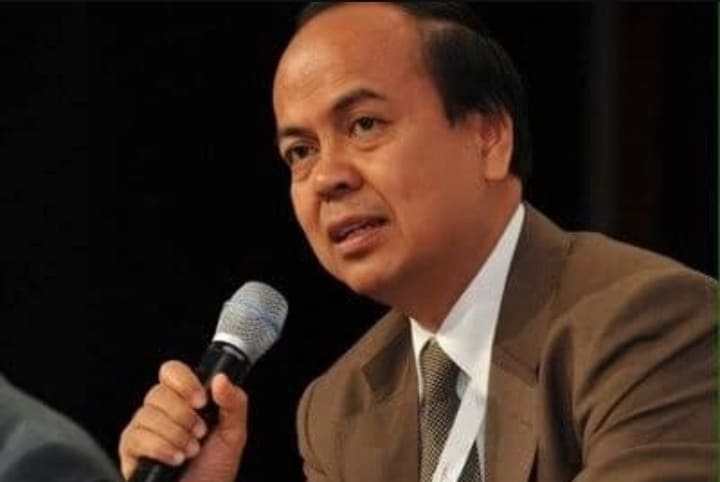
By: Hafid Abbas
President of the Southeast Asian National Human Rights Institutions Forum (SEANF), 2014–2015
There is a simple question by which any tourism destination can be judged: What has changed in the lives of the people who live there?
Not merely how many tourists arrive, how many hotels are built, how much investment comes in, or how often the world watches a race at its circuit. The deeper questions are these: Have local incomes risen? Have local businesses entered the tourism supply chain? Do children have better educational opportunities? And do communities have a meaningful voice in shaping the future of their own homeland?
Mandalika has become one of Indonesia’s most important tourism stages. Its international circuit, beaches, hotels, infrastructure and global sporting events have placed Lombok firmly on the world map. Yet the success of a destination cannot be measured by infrastructure alone. Ultimately, it must also be measured by how far prosperity reaches the people who live around it.
Land, livelihoods and community participation have been part of Mandalika’s development journey. In responding to community grievances, the Asian Infrastructure Investment Bank (AIIB) said its independent investigation found no evidence of coercion, direct violence or intimidation in the land-acquisition process, while also acknowledging the need for stronger engagement with affected communities.
This is where experiences from other parts of the world offer valuable lessons—not as models to be copied mechanically, but as evidence that tourism becomes more inclusive and resilient when local people occupy a meaningful place in its economy.
Māori: When Culture Becomes Economic Strength
In New Zealand, the Māori are not simply performers presenting their culture to visitors. They are also entrepreneurs, owners and economic actors.
Government data show that the Māori economy grew from NZ$17 billion in 2018 to NZ$32 billion in 2023. Māori tourism contributed approximately NZ$1.2 billion in 2023, while almost 24,000 Māori-owned businesses were recorded that year.
The significance of these figures goes beyond money. They demonstrate that culture can become an economic asset when the people who own that culture are also empowered to create, manage and benefit from its value.
Lombok’s Sasak heritage is no less compelling: weaving, cuisine, music, architecture, rituals, indigenous knowledge and stories handed down through generations.
The question, therefore, should not simply be how many Sasak people work in hotels or perform for tourists. A more fundamental question is: How much of Mandalika’s tourism value is owned, managed and shaped by the Sasak people themselves?
Namibia: Communities Sharing in Tourism Value
Namibia offers another lesson through its communal conservancies. Local communities participate in managing natural resources and receive economic benefits from conservation and tourism.
In 2022, communities in communal conservancies received about N$75 million in cash income, approximately US$4.2 million (RP76.5 billion), with around 64 percent coming from joint-venture tourism. The model also generated more than 3,200 jobs.
What matters is not simply the amount of money, but how the benefits are distributed. Communities have institutions, decision-making mechanisms and economic relationships with tourism enterprises.
This illustrates the difference between communities as recipients of compensation and communities as participants in the value chain.
That chain is extensive: food, transportation, laundry, handicrafts, guiding, performances, accommodation, cleaning services and creative industries. The more links in that chain are locally owned, the more tourism revenue remains within the destination.
La Fortuna: When Tourism Revenue Returns to the Community
In La Fortuna, Costa Rica, the connection between tourism and community development can be seen at a waterfall.
Catarata Río Fortuna is managed by Asociación de Desarrollo Integral de La Fortuna (ADIFORT), a community-based nonprofit organization. Revenue from visitors supports education, infrastructure, environmental protection, sports, culture, security and other community needs.
In 2024, the waterfall received an average of about 1,000 visitors a day, with roughly 97 percent being international tourists. With an entrance fee of US$20 for foreign visitors and US$10 for Costa Rican citizens, annual ticket revenue can be estimated at around Rp129 billion, depending on visitor composition.
The important point is not the exact figure but the principle: tourists arrive, revenue is generated, and that revenue is converted into community development.
Tourism thus becomes part of community life rather than an economic activity operating alongside it.
Cape Town: Growing with the Local Economy
Cape Town offers yet another perspective. In 2025, tourism generated approximately R24.5 billion, or about US$1.4 billion (Rp25.2 trillion), in direct visitor spending and supported more than 106,000 jobs. Tourism contributed around 6.3 percent of the city’s Gross Value Added.
But Cape Town’s strength lies not simply in these numbers. Its tourism proposition is built around living assets: people, food, art, creativity, history, nature and everyday urban life.
A destination is ultimately more than a collection of hotels and attractions. It is a story about people and place.
Mandalika has a powerful story of its own: the Sasak people, villages, weaving, cuisine, music, traditions, beaches, legends and the everyday life of Lombok. These are not peripheral elements of tourism. They are precisely what can make Mandalika distinctive in a crowded global market.
Building Mandalika Together
The four experiences are different in history, governance and economic structure. Yet they share one important principle: local communities are not treated merely as spectators. They participate—as cultural owners, entrepreneurs, resource managers, employees, beneficiaries and decision-makers.
This suggests a broader way of measuring tourism success.
We should ask: What percentage of procurement comes from local businesses? How many small and medium enterprises supply hotels? How many tourism businesses are locally owned? How much visitor spending remains in the local economy? How many young people become entrepreneurs rather than merely job seekers?
We should also ask how much tourism revenue returns to education, environmental protection, public facilities and community development.
Ultimately, the question is simple: Who receives a meaningful share of the value created by the destination?
This is not only a question of social justice. It is also a question of economic sustainability. Communities that genuinely benefit from tourism have stronger incentives to protect the environment, preserve culture, welcome visitors and maintain the quality of the destination.
Let Mandalika’s Prosperity Reach Its People
Mandalika has already gained something invaluable:the world’s attention. Its international circuit has carried Lombok onto global screens. Investment has arrived, infrastructure has expanded and tourists continue to come.
But the deeper test of success is more human.
Success will be visible when young Sasak people see tourism not merely as a place to find jobs, but as a space to build businesses. When local farmers supply hotels. When Sasak women transform cuisine, weaving and crafts into high-value enterprises. When surrounding villages share tangibly in the visitor economy. And when Sasak culture is not merely performed for tourists, but becomes a source of knowledge, creativity, dignity and prosperity for the people who own it.
Then the people of Sasak can say: “Mandalika is growing, and we are growing with it.”
That may be the most honest measure of a world-class destination.
A strong destination is not merely a place where tourists have exceptional experiences and investors earn reasonable returns. It is a place where workers have decent jobs, nature is protected, culture is respected and local communities receive a meaningful share of the prosperity they help create.
Mandalika already has a world-class stage.
As an old African proverb reminds us, “If you want to go fast, go alone; if you want to go far, go together.” Mandalika’s journey to becoming a truly world-class destination will be measured not only by how far it can take the world, but by how far it can carry its own people with it.

![Gedung KPK, Jakarta Selatan. [Foto: Ah/rilpolitikcom]](https://rilpolitik.com/wp-content/uploads/2025/02/IMG-20250222-WA0001-350x220.jpg)