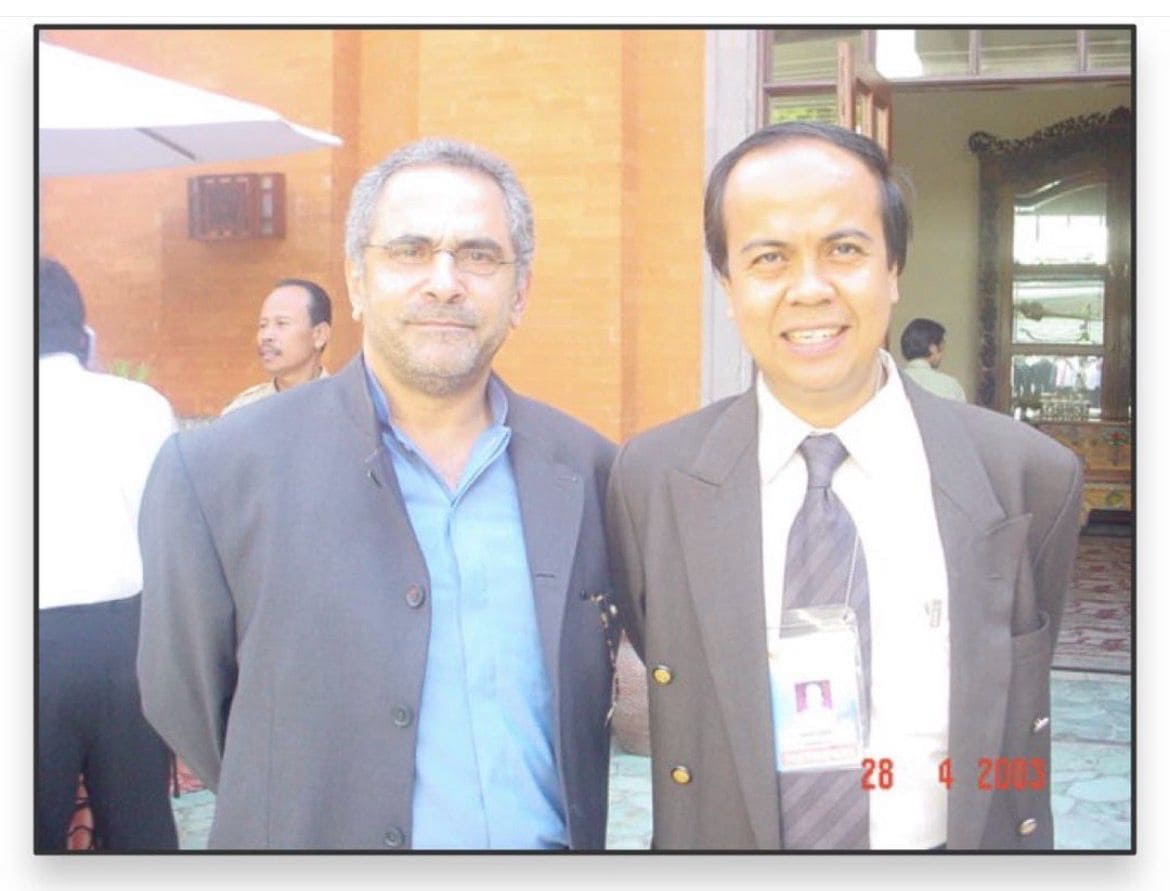
By: Hafid Abbas
Former Director-General for Human Rights Protection, the Republic of Indonesia (2000–2006)
The post-1999 relationship between Indonesia and Timor Leste remains one of Southeast Asia’s most complex diplomatic episodes. On one side was the urgent demand for justice for severe human rights violations spanning decades, especially surrounding the 1999 referendum. On the other, the imperative to preserve political stability, bilateral relations, and the future of both nations. Navigating this tension required an unconventional choice: rejecting the internationalization of these cases and pursuing reconciliation through the Commission of Truth and Friendship (CTF).
This decision was far from accidental. It reflected careful political calculation, strategic diplomacy, and the leadership vision of Indonesian figures such as Jusuf Kalla, Hassan Wirajuda, and Susilo Bambang Yudhoyono, alongside Timorese partners like Xanana Gusmão, José Ramos-Horta, and Mari Alkatiri.
International Pressure and the Rome Statute Threat
By late 2004, Indonesia faced intense international scrutiny. UN Secretary-General Kofi Annan proposed a Commission of Experts (CoE) to assess Indonesia’s ad hoc human rights trials concerning Timor Leste. Beyond technical evaluation, this move risked paving the way for international legal mechanisms under the Rome Statute, potentially implicating 401 military and police officers.
Minutes from the December 12, 2004 meeting chaired by Vice President Jusuf Kalla reveal Indonesia’s acute awareness: internationalization could trigger legal, political, and sovereignty consequences, yet outright rejection also carried diplomatic risks. The solution required offering a credible alternative—one that respected justice while safeguarding national interests.
Diplomacy as a Strategic Bridge
Indonesia’s key strategy was to ensure that Timor Leste did not back international prosecution. Agreement on a bilateral solution would significantly weaken the UN’s legitimacy to intervene.
Foreign Minister Hassan Wirajuda spearheaded this sensitive approach, balancing Indonesia’s state interests with historical and psychological realities for Timorese society. Informal diplomacy—track two engagements—played a decisive role.
Two figures often overlooked publicly, Fanny Habibie and Hafid Abbas, proved pivotal. Habibie cultivated trust with Timorese leaders prior to formal talks, while Abbas served as a strategic bridge within Indonesia and with the international community. His initiative to involve Robert and Alice Evans as international mediators lent global legitimacy to CTF’s process. In recognition, Abbas received an honorary doctorate from Hartford International University for Religion and Peace in 2008.
Timor Leste’s internal dynamics were complex. Political factions pressed for international justice, supported by Portugal and New Zealand. The decision by Xanana, Ramos-Horta, and Alkatiri to pursue reconciliation reflected extraordinary political maturity for a young nation.
CTF: A Global Innovation in Conflict Resolution
In 2005, Indonesia and Timor Leste launched the Commission of Truth and Friendship (CTF). Operational until mid-2008, CTF became the world’s first bilateral truth commission, composed of 16 commissioners representing both countries. Its mandate was ambitious: uncover facts, facilitate public hearings, and foster institutional reform while building bilateral trust.
Over 30 months, CTF brought together diverse actors—from military officials to independence fighters—in a process that transcended factual truth-seeking. As noted by the Evanses, the commissioners themselves became “bridges of reconciliation,” prioritizing restorative justice: victim rehabilitation, acknowledgment of truth, institutional reform, and enduring cross-border cooperation.
From Truth to Reconciliation
CTF’s final report, Per Memoriam ad Spem (“Remembering the Past to Embrace Hope”), acknowledged serious human rights violations, attributed primary responsibility to Indonesian state institutions, and deliberately avoided recommending blanket amnesty. Its restorative approach sought to repair relationships rather than focus solely on punishment, encompassing programs such as victim rehabilitation, human rights training, peace zones, and documentation centers.
While critics have argued that CTF prioritized friendship over full disclosure— summarized in the phrase “too much friendship, too little truth”—time has validated its approach. Two decades on, Indonesia and Timor Leste maintain stable relations without unresolved conflict overshadowing the past.
International Facilitation and Global Lessons
International advisors, including Robert and Alice Evans and David Cohen of UC Berkeley, enhanced CTF’s credibility by providing comparative perspectives from global truth commissions. Their work mirrors the role of Martti Ahtisaari in Aceh’s peace process: demonstrating that bilateral reconciliation can be an effective alternative to international adjudication.
Despite initial skepticism, CTF’s report eventually earned widespread acknowledgment for its professionalism and independence. The UN Secretary-General recognized it as a meaningful step toward justice and reconciliation.
Leadership Legacy and a Model for the Future
Indonesia and Timor Leste’s choice to bypass international courts in favor of CTF offers a powerful lesson: truth and friendship are not mutually exclusive. Strategic, empathetic leadership—from Kalla’s political acumen, Wirajuda’s careful diplomacy, and Yudhoyono’s presidential authority to the Timorese leaders’ courage—made this possible.
The achievements of Jusuf Kalla, Hassan Wirajuda, Susilo Bambang Yudhoyono, Xanana Gusmão, José Ramos-Horta, and Mari Alkatiri remind us that leadership is ultimately measured not by the ability to win conflicts but by the ability to transform them. Their collective vision showed that truth and friendship are not mutually exclusive. Rather, they are complementary foundations upon which durable peace can be built.
As Mahatma Gandhi wisely observed, “There is no path to peace; peace is the path.” The Indonesia–Timor-Leste experience illustrates precisely this principle. Reconciliation was not merely the destination; it was the method through which both nations chose to move forward.
And as expressed in Tetum, the language of Timor-Leste:
“Loron ne’e loron ho pacifikasaun, la bele fo-fali. A- Today, with peace, we cannot give up.”
For the international community, the lesson remains profound. Justice need not always be pursued through distant tribunals or adversarial mechanisms. Under the right conditions, it can emerge through dialogue, acknowledgment, institutional reform, and a shared commitment to human dignity. Friendship between nations is not the denial of truth; it is often the bridge that makes truth bearable, meaningful, and transformative. By remembering the past, healing wounds, and walking together, former adversaries can build a future that is not only peaceful but also just, dignified, and shared.