By: Hafid Abbas
Visiting Professor, Asia Center, Harvard University (2006)
Indonesia’s future will be shaped not only by the leaders who govern today, but also by the foundations they establish for generations to come. Among the most important foundations is food security. A nation of more than 280 million people cannot achieve lasting prosperity, economic independence and political stability without ensuring that its people have access to sufficient, affordable and nutritious food.
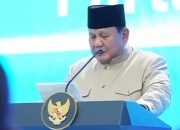
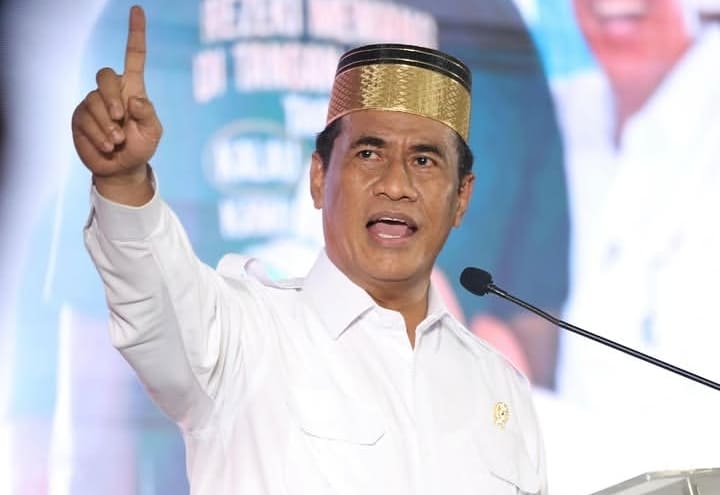
In this context, the working relationship between President Prabowo Subianto and Andi Amran Sulaiman represents an important chapter in Indonesia’s continuing pursuit of food sovereignty.
Their shared commitment to strengthening national agricultural production reflects a fundamental understanding: food is not merely an economic commodity. It is a strategic national asset, an instrument of sovereignty and a cornerstone of social justice.
From political commitment to national action
President Prabowo has consistently placed food self-sufficiency among his administration’s strategic priorities. His vision recognizes that Indonesia must reduce excessive dependence on imported food commodities and strengthen its ability to meet domestic needs through its own agricultural resources.
Turning this vision into reality requires more than political declarations. It demands decisive leadership, institutional coordination, agricultural innovation and, above all, an understanding of the challenges experienced by farmers.
This is where Andi Amran Sulaiman’s experience becomes particularly significant.
Having previously served as agriculture minister from 2014 to 2019 and returning to the position in October 2023, Amran brought experience in agricultural management, entrepreneurship and public administration. His return to government provided continuity in agricultural policymaking at a critical moment for Indonesia.
Under President Prabowo’s administration, agricultural development became an increasingly central national priority. The collaboration emphasized increasing domestic production, improving fertilizer distribution, modernizing agricultural machinery, rehabilitating irrigation infrastructure and strengthening the government’s capacity to absorb farmers’ harvests.
The results reported in 2025 were encouraging. Statistics Indonesia recorded rice production of approximately 34.69 million tonnes, an increase of 13.29 percent compared with 2024. On January 7, 2026, President Prabowo officially announced that Indonesia had achieved food self-sufficiency in 2025.
These developments represent an important milestone. However, their significance should be measured not only by production figures or government announcements, but also by their lasting impact on farmers, consumers and the national economy.
The legacy of leadership and continuity
One important lesson from the Prabowo-Amran partnership is the value of continuity in national development.
Agricultural transformation cannot be accomplished in a single political cycle. Irrigation systems, seed development, agricultural research, farmer institutions and rural infrastructure require sustained investment and long-term planning.
Amran’s experience across different administrations offers an opportunity to connect previous agricultural initiatives with the priorities of the present government.
His legacy should therefore be understood in three dimensions.
First, the strengthening of national food sovereignty. Indonesia must have the capacity to produce sufficient rice, corn and other essential commodities while developing reliable reserves and distribution systems. Domestic production should become a dependable foundation of national resilience.
Second, the improvement of farmers’ welfare. Farmers must be treated as strategic partners in national development, not merely as producers expected to fulfill government targets. Fair purchasing prices, affordable fertilizers, access to financing, modern technology and stronger agricultural cooperatives must become permanent features of agricultural policy.
Third, the modernization of Indonesian agriculture. The future cannot depend entirely on traditional production methods. Mechanization, digital agriculture, research, climate adaptation and investment in downstream agricultural industries must become integral to the country’s development strategy.
These three dimensions are interconnected. Food sovereignty without prosperous farmers is incomplete. Agricultural modernization without environmental sustainability is short-sighted. And higher production without an efficient distribution system will not necessarily guarantee affordable food for ordinary Indonesians.
Beyond rice: A broader vision for national prosperity
Indonesia’s agricultural future must extend beyond rice self-sufficiency.
The country possesses enormous potential in corn, sugar, horticulture, fisheries, livestock, plantations and other agricultural commodities. These sectors can strengthen food security while creating employment, supporting small businesses and stimulating economic growth in rural communities.
The government should therefore use the momentum of its food-security agenda to build a more integrated agricultural economy.
Particular attention should be given to young farmers. Indonesia needs a new generation of agricultural entrepreneurs who view farming as a modern, productive and economically attractive profession.
Universities, research institutions, private companies and local governments should work together to make agricultural innovation accessible to farmers in every region, including remote areas outside Java.
At the same time, environmental sustainability must remain central to the national agenda. Agricultural expansion should be accompanied by responsible land management, efficient water use, biodiversity protection and adaptation to climate change.
Indonesia cannot build food sovereignty by compromising the natural resources upon which future generations will depend.
From individual achievements to national institutions
Perhaps the greatest test of leadership is whether its achievements survive beyond the individuals who initiated them.
President Prabowo and Andi Amran Sulaiman have an opportunity to transform the current momentum into lasting national institutions. Agricultural policies must be supported by transparent data, professional management, accountable public spending and strong coordination between central and regional governments.
Equally important, Indonesia should strengthen independent evaluation of agricultural programmes. Production statistics, government rice reserves and farmers’ purchasing power must be assessed regularly to ensure that national achievements translate into measurable improvements in people’s lives.
The government must also maintain a balanced approach between domestic production and international trade. Strategic imports may sometimes be necessary to manage shortages, stabilize prices or address temporary disruptions. Food sovereignty should mean greater national capacity and resilience, not isolation from international markets.
A confident Indonesia should be able to produce competitively, trade strategically and protect the interests of its farmers and consumers.
A legacy for the next generation
Ultimately, the legacy of President Prabowo’s leadership and Andi Amran Sulaiman’s contribution to agricultural development should not be defined solely by their positions, political recognition or the achievements of a particular administration.
It should be measured by whether Indonesian farmers become more prosperous, whether food becomes more affordable, whether rural communities gain better opportunities and whether the country becomes more resilient against global economic and climate-related disruptions.
History will remember leaders not simply for the promises they make, but for the institutions they strengthen and the opportunities they leave behind.
Indonesia stands at an important crossroads. Its demographic potential, natural resources and strategic position provide significant opportunities to become a stronger agricultural and economic power in Asia.
Achieving that ambition requires political commitment, professional leadership and cooperation across generations.
The partnership between Prabowo and Amran offers an important foundation upon which this ambition can be pursued. Its most valuable legacy will be a national agricultural system that does not depend on any single minister or president, but continues to serve the Indonesian people through successive generations of leadership.
Food sovereignty is ultimately about more than producing enough rice or corn. It is about dignity, independence, prosperity and the right of every Indonesian family to live with confidence in the future.
That is the legacy worth building. And that is the future Indonesia must secure.