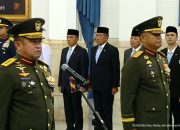
![Rektor STIE Dharma Bumiputra 2008-2020, Prof. Hafid Abbas. [Foto: istimewa]](https://rilpolitik.com/wp-content/uploads/2026/05/1000062079.jpg)
By: Hafid Abbas
the Director of Indonesia Study Center at Hartford International University for Religion and Peace (HIU), USA
What does it take to build a nation after winning its freedom? Courage, certainly. Perseverance, diplomacy and reconciliation, too. But there is another quality that is often overlooked: the ability to manage the extraordinarily difficult transition from resistance to governance, from conflict to institutions, and from independence to democracy.
This is what makes the journey of Kay Rala Xanana Gusmão particularly remarkable.
On September 5, Hasanuddin University in Makassar will confer upon the Prime Minister of Timor-Leste the degree of Doctor Honoris Causa. For a university, such an honor is not merely ceremonial. It is a statement of values—a declaration about the kind of leadership that deserves to be remembered, studied and transmitted to future generations.
In recognizing Xanana, Hasanuddin University sees five dimensions of leadership that transcend the history of one individual or one country.
First, Xanana Gusmão symbolizes the courage and perseverance that gave birth to a nation. He was not merely a witness to the birth of Timor-Leste. He was one of its principal architects. Through years of resistance, hardship and uncertainty, he helped sustain the aspiration of his people for self-determination. His life reminds us that freedom is rarely given. It is pursued through courage, sacrifice and perseverance. Yet winning freedom is only the beginning.
Second, Xanana demonstrated that the wounds of conflict can be transformed into bridges of reconciliation. Not every freedom fighter becomes a peacemaker. Xanana chose the more difficult path: remembering history without allowing it to become an inheritance of hatred.
His contribution to the transformation of relations between Timor-Leste and Indonesia is especially significant. Two peoples who experienced a painful history have gradually become neighbors capable of cooperation and friendship.
This carries a universal lesson: the greatest victory is not defeating an adversary, but creating a future in which former adversaries can live together in dignity. Reconciliation does not erase history. It gives history a different purpose.
Third, and perhaps most importantly, Xanana demonstrated the managerial art of transforming a fragile new country into a functioning democracy. This aspect of his leadership deserves greater attention.
When Timor-Leste emerged as an independent state, it faced challenges far different from those of a liberation movement. Infrastructure had been devastated. Institutions were fragile. Economic resources were limited. Communities carried the scars of conflict. A new political system had to be created while national unity had to be preserved.
The task was enormous: to turn resistance into administration, aspirations into institutions, and independence into everyday governance. This required more than charisma or historical legitimacy. It required political management, negotiation, institution-building, patience and the ability to reconcile competing interests while keeping the national interest in view.
A resistance movement can unite people against a common adversary. A democracy must unite people despite their differences. A movement can survive through sacrifice. A government must deliver services, create opportunities, maintain institutions and cultivate public trust.
This is why Xanana’s managerial capacity as a nation-builder deserves recognition alongside his courage as a freedom fighter. A country is not built by speeches alone. It is built by institutions that function, decisions that are implemented, differences that can be negotiated, and citizens who gradually believe that the state belongs to them. In this sense, nation-building itself becomes a form of leadership management.
Fourth, Xanana transformed himself from a freedom fighter into a statesman. That transition is neither simple nor automatic. The logic of resistance is confrontation. The logic of democracy is negotiation. The authority of a fighter derives from sacrifice; the legitimacy of a democratic leader must be continuously renewed through institutions and public trust.
Xanana’s journey demonstrates that statesmanship means understanding when the struggle must change form. Independence is not the end of the struggle for freedom. It is the beginning of the responsibility to make freedom meaningful.
Fifth, Xanana embodies a culture of peace. This is particularly meaningful for Hasanuddin University, whose academic mission is inseparable from humanity, peace and justice. A university does not honor only what a person has achieved. It honors the values that person’s life represents.
In Xanana, we see courage tempered by humanity, struggle transformed into reconciliation, political experience directed toward nation-building, and painful history transformed into the possibility of friendship.
A sea that remembers. There is another reason why this honor carries special meaning in Makassar. The relationship between our peoples is older than the modern borders of Indonesia and Timor-Leste. For centuries, Bugis and Makassar sailors crossed the seas toward Timor, carrying goods, culture and human relationships. One enduring reminder is Pante Macassar in Oecusse—a name that preserves an echo of the maritime encounters of an earlier age.
The sea connected our peoples before political borders separated them. Today, perhaps the sea can connect us again—not primarily through trade, but through education, research, friendship and peace.
The Timor-Leste students who study at Hasanuddin University can become living bridges between our two countries. They carry knowledge from Makassar to Timor-Leste and friendship from Timor-Leste back to Indonesia. Our ancestors crossed the sea carrying goods. Let us cross it today carrying knowledge and hope.
From memory to hope
The deepest meaning of Xanana Gusmão’s journey may lie in his refusal to allow the past to dictate the future. He experienced imprisonment and witnessed the suffering of his people. He knew the bitterness of conflict and the uncertainty of political transition.
Yet he chose not to turn those wounds into permanent divisions. He struggled when his people needed independence. He reconciled when history demanded healing. He governed when his country needed institutions. And he continued to lead when the difficult work of building a democratic state had only begun.
That is why his story extends beyond Timor-Leste. It speaks to every society emerging from conflict: winning independence is one achievement; managing peace is another; building democratic institutions is another; and creating a state capable of giving citizens dignity and hope may be the greatest challenge of all.
When Hasanuddin University confers the Doctor Honoris Causa upon Xanana Gusmão, therefore, it is honoring more than a former resistance leader or a sitting prime minister.
It is honoring a journey—from struggle to independence, from conflict to reconciliation, from resistance to governance, and from fragility toward democratic statehood.
Above all, it honors a profound lesson in leadership: The measure of a leader is not only the battle he wins, but the society he succeeds in building after the battle is over. Perhaps this is why the words of Stephen Hawking resonate so deeply with Xanana’s journey: “While there’s life, there is hope.”
Hope, however, is not merely something we wait for. Hope is something we build. And that may be Xanana Gusmão’s most enduring legacy.
From memory to hope. From conflict to peace. From independence to democracy. And from two peoples shaped by difficult history to two nations walking together toward a shared future.
Per Memoriam ad Spem. From memory to hope.
![Gedung KPK, Jakarta Selatan. [Foto: Ah/rilpolitikcom]](https://rilpolitik.com/wp-content/uploads/2025/02/IMG-20250222-WA0001-350x220.jpg)