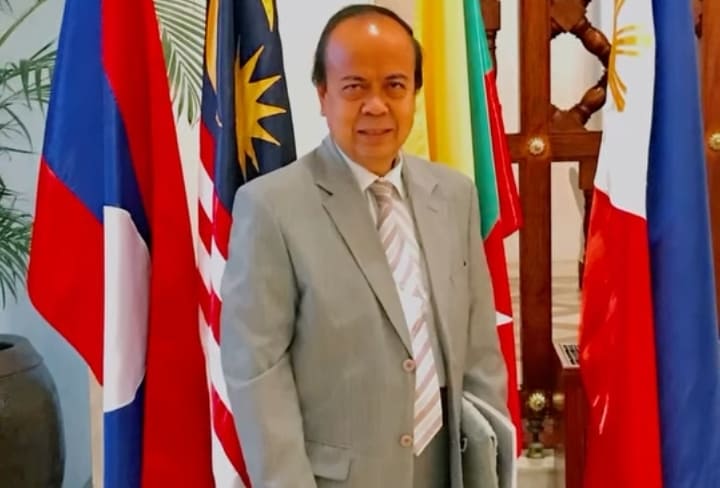
By: Hafid Abbas
International Consultant at SEAMEO RETRAC, Ho Chi Minh, 2014
At the outset of his second term as Rector of Hasanuddin University (UNHAS) for the period 2026–2030, Jamaluddin Jompa has articulated a forward-looking and strategically significant vision: the establishment of a SEAMEO Study Center for Peace and Conflict Transformation at UNHAS. This initiative is not merely an institutional ambition; it reflects a broader recognition of Southeast Asia’s evolving geopolitical realities and the urgent need for innovative mechanisms to sustain peace in the region. As a university currently ranked within the 951–1000 band globally and 201 in Asia, and positioned among the top ten leading institutions out of approximately 5,000 higher education providers in Indonesia, UNHAS is well placed to leverage its growing international reputation. Through this initiative, it seeks to elevate its global engagement while serving ASEAN as a center of excellence in peace and conflict transformation. The guiding wisdom of the Latin maxim, “Si vis pacem, para pacem”—if you wish for peace, prepare for peace—aptly captures the proactive spirit underpinning this endeavor.
Southeast Asia, long celebrated for its cultural diversity, historical depth, and economic dynamism, now stands at a critical juncture. ASEAN’s aspiration to become a fully integrated political, economic, and socio-cultural community by 2035 presents both opportunities and formidable challenges. While economic integration has advanced considerably, the region continues to grapple with persistent and emerging sources of instability. Unresolved territorial disputes—such as those between Thailand and Cambodia—remain sensitive flashpoints. At the same time, transnational threats including human trafficking, violent extremism, cybercrime, and narcotics networks cut across borders, undermining governance and regional cohesion. These challenges are compounded by socio-economic disparities, identity-based tensions, and the uneven distribution of development gains.
In this complex environment, peace cannot be taken for granted as a natural byproduct of economic growth. Rather, it must be consciously cultivated through sustained efforts in dialogue, education, and institutional innovation. This is where the proposed SEAMEO UNHAS Regional Center for Peace and Conflict Transformation assumes particular significance. Positioned within the Southeast Asian Ministers of Education Organization (SEAMEO) framework, the center would fill a critical gap in the region’s institutional architecture. While SEAMEO’s existing 26 centers have made valuable contributions in fields such as education policy, public health, agriculture, language training, and environmental sustainability, none is specifically mandated to address the multifaceted challenges of conflict transformation and peacebuilding.
The UNHAS initiative therefore represents both an innovation and a necessity. By focusing explicitly on peacebuilding, mediation, and conflict transformation, the center would complement existing SEAMEO programs while introducing a new dimension of regional cooperation. It would also align with ASEAN’s broader normative frameworks, including the ASEAN Political-Security Community Blueprint, which emphasizes conflict prevention, confidence-building, and the peaceful settlement of disputes.
UNHAS: A Legacy of Peace and Diplomacy
The credibility of this proposed center is firmly grounded in UNHAS’s historical contributions to peace and diplomacy. The university has produced distinguished alumni who have played pivotal roles in resolving some of Indonesia’s most complex conflicts. Among them is former Vice President Jusuf Kalla, whose mediation efforts were instrumental in ending sectarian violence in Poso and Ambon through the Malino Declarations, as well as in facilitating the 2005 Helsinki Peace Accord that brought a durable resolution to the Aceh conflict. These achievements underscore the practical relevance of Indonesian experience in conflict resolution, particularly in managing diversity within a democratic framework.
Other notable figures, including Hamid Awaluddin and Farid Husen, have also contributed to negotiation processes and post-conflict reconstruction efforts. Their experiences highlight the importance of combining political will, cultural sensitivity, and technical expertise in achieving sustainable peace. UNHAS’s Center for Peace, Conflict, and Democracy (CPCD) has further institutionalized these efforts by promoting research, education, and community engagement in peacebuilding. The proposed SEAMEO center would build upon this foundation, scaling up its impact to the regional and global levels.
Unique Symbolism and Global Resonance
Beyond its practical contributions, the initiative carries a profound symbolic significance. The historical linkage between Makassar, Indonesia, and Macassar in South Africa reflects enduring patterns of transoceanic exchange and solidarity, rooted in shared histories of struggle and resilience. This connection is further deepened by UNHAS’s recognition of Nelson Mandela, who was awarded an honorary doctorate in 2005 through the efforts of Robert Evans, Rady Ghani, and Hafid Abbas. Mandela’s enduring legacy of reconciliation, justice, and moral leadership continues to inspire across continents, providing a powerful ethical foundation for advancing contemporary peace initiatives.
By drawing on this shared history, the proposed center can position itself as more than a technical institution; it can serve as a moral and intellectual bridge linking Southeast Asia with Africa and the wider Global South. In doing so, it reinforces the idea that peacebuilding is not confined to any single region but is a shared global responsibility.
Regional and Global Strategic Role
While rooted in Indonesia’s national context, the SEAMEO UNHAS Regional Center is inherently outward-looking. Indonesia’s active participation in international forums such as the Non-Aligned Movement (NAM), the Organization of Islamic Cooperation (OIC), and the New Asian–African Strategic Partnership provides a strong diplomatic platform for the center’s activities. Leveraging these networks, the center could facilitate cross- regional exchanges of knowledge and best practices in conflict resolution.
Its operational scope would encompass several key areas. First, it would offer training programs designed to equip emerging leaders, mediators, and civil society actors with the skills necessary to manage conflicts effectively. Second, it would conduct applied research on the root causes and dynamics of conflicts, generating evidence-based policy recommendations. Third, it would serve as a platform for dialogue, bringing together stakeholders from government, academia, and local communities. Finally, it would host international conferences and leadership residencies, fostering sustained engagement among scholars and practitioners.
Core Operational Pillars
To ensure strategic focus, the center would organize its activities around three interrelated pillars. The first is regional peacebuilding, which involves developing mechanisms for early warning, preventive diplomacy, and confidence-building among states. The second is combating transnational crime, with an emphasis on strengthening regional cooperation to address issues such as trafficking, smuggling, and extremism. The third is peace education, aimed at integrating values of tolerance, intercultural understanding, and conflict resolution into educational systems across ASEAN.
These pillars are mutually reinforcing. Effective peacebuilding requires not only institutional frameworks but also a culture of peace nurtured through education. Similarly, addressing transnational crime demands both technical cooperation and trust among states, which can be strengthened through sustained dialogue.
Comparative Advantage within SEAMEO
The proposed center offers several distinct advantages within the SEAMEO network. Its thematic focus on peace and conflict transformation addresses a critical gap in the organization’s current portfolio. Its historical and institutional legitimacy is grounded in UNHAS’s track record and alumni contributions. Its global orientation enables it to extend SEAMEO’s reach beyond Southeast Asia, enhancing the region’s role in global peace discourse. Finally, its operational readiness—supported by existing infrastructure and networks—positions it for rapid implementation.
Vision for the Future
Ultimately, the SEAMEO UNHAS Regional Center represents more than a policy initiative; it is a strategic investment in the future of Southeast Asia. By integrating research, education, and diplomacy, it advances a holistic approach to peacebuilding that moves beyond reactive responses toward prevention, inclusivity, and long-term sustainability—principles essential for navigating an increasingly complex world. In doing so, the center is poised to contribute significantly to ASEAN’s aspiration of becoming a cohesive single community of nations by 2035, strengthening the region’s political, social, and cultural unity through a shared commitment to peace.
As Southeast Asia deepens its integration, the need for stable and resilient foundations becomes ever more apparent. Peace is not a static condition but a continuous process requiring commitment, innovation, and collaboration across borders. The proposed center can serve as a catalyst for this process, fostering mutual understanding and cooperative mechanisms that bind nations together in common purpose. In this regard, the UNHAS initiative stands as a timely and visionary contribution—one that has the potential to shape not only the region’s future but also its role in promoting peace on a global scale. As Plato suggests through his philosophy of justice and harmony, “Ubi iustitia regnat, ibi pax floret, inter homines et inter gentes”—where justice reigns, there peace flourishes, among people and among nations.
![Spanduk raksasa yang dipasang aktivis Greenpeace Indonesia di atas Patung Selamat Datang Bundaran HI, Jakarta Pusat. [Foto: Greenpeace Indonesia]](https://rilpolitik.com/wp-content/uploads/2026/10/1000076504-350x220.jpg)




![Spanduk raksasa yang dipasang aktivis Greenpeace Indonesia di atas Patung Selamat Datang Bundaran HI, Jakarta Pusat. [Foto: Greenpeace Indonesia]](https://rilpolitik.com/wp-content/uploads/2026/10/1000076504-180x130.jpg)