By: Hafid Abbas
Director, Center for Global Peace and Conflict Resolution, Hasanuddin University (UNHAS)
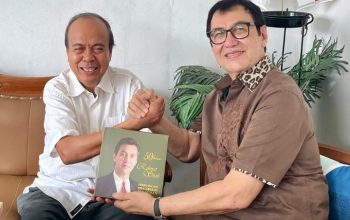
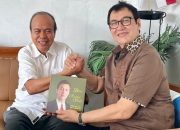
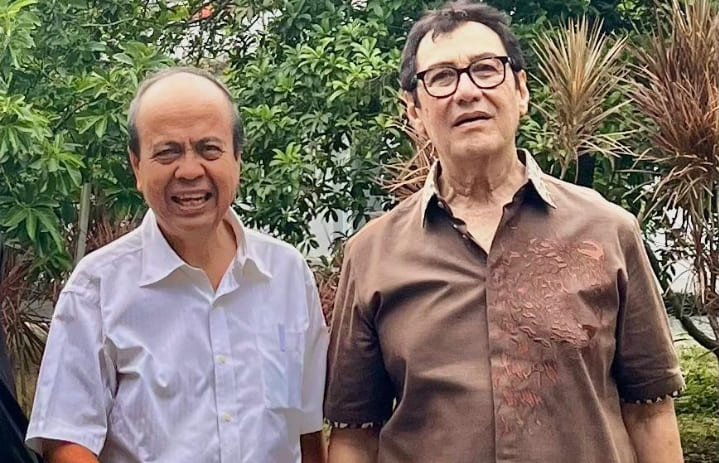
In April 2004, I visited the Jimmy Carter Center in Atlanta at the invitation of the U.S. Department of State. Thirteen years later, in May 2017, I visited the Yunus Centre in Dhaka while participating in the Global Action Against Mass Atrocity Crimes (GAAMAC). This September, I had the opportunity to meet Dr. Rahmat Shah, founder of the Rahmat International Wildlife Museum & Gallery in Medan.
At first sight, these three institutions could hardly seem more different. The Carter Center carries the legacy of a former American president and his global work for peace, democracy and human rights. The Yunus Centre advances Muhammad Yunus’s vision of social business as a response to poverty and inequality. The Rahmat Museum grew from Dr. Rahmat Shah’s passion for wildlife and his commitment to conservation. Yet beneath these different missions lies a striking common thread: each has transformed a personal vision into a public institution, turning individual conviction into knowledge, education and service for humanity.
Yet, after seeing them across different periods and continents, I was struck by a common idea: a great institution can begin with one person’s conviction, but its ultimate purpose is to serve humanity beyond that person.
The Carter Center, founded by Jimmy and Rosalynn Carter in partnership with Emory University, is guided by commitments to human rights and the alleviation of human suffering. Its work includes conflict resolution, democracy, human rights and health. The Center emphasizes research, practical action, partnerships and measurable results.
The Yunus Centre represents a different path. Established to promote Muhammad Yunus’ philosophy of social business, it has become a global resource center for social-business activities. Its underlying proposition is that economic activity can be organized around solving social problems rather than maximizing private profit.
The Rahmat International Wildlife Museum & Gallery in Medan offers another expression of the same institutional spirit. Founded by Dr. H. Rahmat Shah and opened in 1999, the museum was created from his love of nature and concern over the extinction of forests and wildlife. Its stated mission is to introduce wildlife diversity to the public, encourage environmental awareness and contribute to conservation education.
Their subjects are different. Their institutional logic is remarkably similar.
First, all three transform a personal vision into public education.
The Carter Center does not simply preserve the memory of Jimmy Carter. It turns his commitment to peace, democracy and human rights into continuing programs around the world. Its peace programs include election observation, rule-of-law initiatives, support for human rights defenders and dialogue for conflict resolution.
Likewise, the Yunus Centre does not merely celebrate Professor Yunus’ Nobel Peace Prize. It disseminates an idea: that poverty is not an inevitable condition and that entrepreneurship can be directed toward social goals. Its programs include social- business education, internships, research, networking and other forms of public engagement.
In Medan, the Rahmat Museum similarly turns a private collection into a public classroom. Its purpose goes beyond displaying thousands of wildlife specimens. It seeks to make visitors understand biodiversity and develop greater care for animals and their habitats.
This is perhaps the first lesson: a collection becomes meaningful when it becomes knowledge, and knowledge becomes meaningful when it changes how people see the world.
Second, each institution connects memory with a larger human challenge.
The Carter Center connects the legacy of a president with the continuing struggles for peace, democracy and human rights.
The Yunus Centre connects the experience of a development economist with the global challenge of poverty.
Rahmat Museum connects one person’s passion for wildlife with the universal challenge of biodiversity loss.
In this sense, these are not simply museums or think tanks or foundations. They are institutions of memory with a mission for the future.
This distinction matters. Many institutions preserve the past. Fewer use the past to mobilize society toward a different future.
Third, their real legacy is not their buildings but the people they inspire.
A center becomes durable when visitors, students, researchers, communities and younger generations can take an idea further than its founder could.
The Carter Center explicitly emphasizes partnerships and the transfer of ownership to local staff, partners and stakeholders. The Yunus Centre similarly seeks to engage students, organizations and entrepreneurs in the social-business movement.
Rahmat Museum has a comparable educational potential in conservation. A child who enters the museum merely curious about an animal may leave with a new understanding of extinction, habitat and humanity’s responsibility toward other species.
That is where I see a particularly important opportunity for Indonesia.
We have many distinguished individuals whose ideas, collections and experiences could become institutions of public learning. But too often, a person’s legacy remains attached to a name, a building or an award. The greater challenge is to transform that legacy into a living institution.
The experience of Atlanta, Dhaka and Medan suggests a possible formula: vision, institution and public purpose.
Jimmy Carter transformed a presidential legacy into a continuing platform for peace and human rights. Muhammad Yunus transformed an economic idea into a global movement for social business. Rahmat Shah transformed his passion for wildlife into a museum designed to educate the public about conservation.
Three continents. Three very different challenges. Three different institutional models.
But perhaps one common message: the measure of a person’s legacy is not how long his or her name remains remembered, but how far the institution built from that vision continues to serve humanity.
During my visit to the Hiroshima Atomic Bomb Museum (July 2003), one reflection attributed to Mother Teresa stayed with me: “There are people who die from hunger because they have no bread, but many more who suffer from a deeper hunger—the hunger to be loved and to love.” The words gave me a different lens through which to understand the legacies of Jimmy Carter, Muhammad Yunus and Rahmat Shah. Their work emerged from different fields—peace, poverty alleviation and wildlife conservation—but each was ultimately driven by a belief that human beings have a responsibility to care for one another and for the living world. In that sense, their legacies are not simply institutional achievements; they are expressions of love translated into public service.
For Indonesia, the Rahmat Museum therefore deserves to be seen not merely as a destination in Medan, but as part of a larger conversation about how private initiative can become public heritage.
Atlanta taught me how a presidential legacy can become an institution for peace. Dhaka showed me how an economic idea can become a movement against poverty. Medan reminded me that the same institutional imagination can begin with something as fundamental as our responsibility toward the living world.
The future of heritage may therefore lie not simply in preserving what humanity has achieved, but in creating institutions that help humanity become better.
Perhaps that is the deepest connection between Carter, Yunus and Rahmat: each transformed a personal vision into a public gift—one that can continue to serve humanity and inspire generations yet unborn.